

Your agent looks great in the demo.
The real question is whether it works every time, for real customers.
I collected about 150 engineering blogs from teams building agents (56 cover evals) and read the important ones closely.
Five practices kept showing up.
1. Start with things that already went wrong
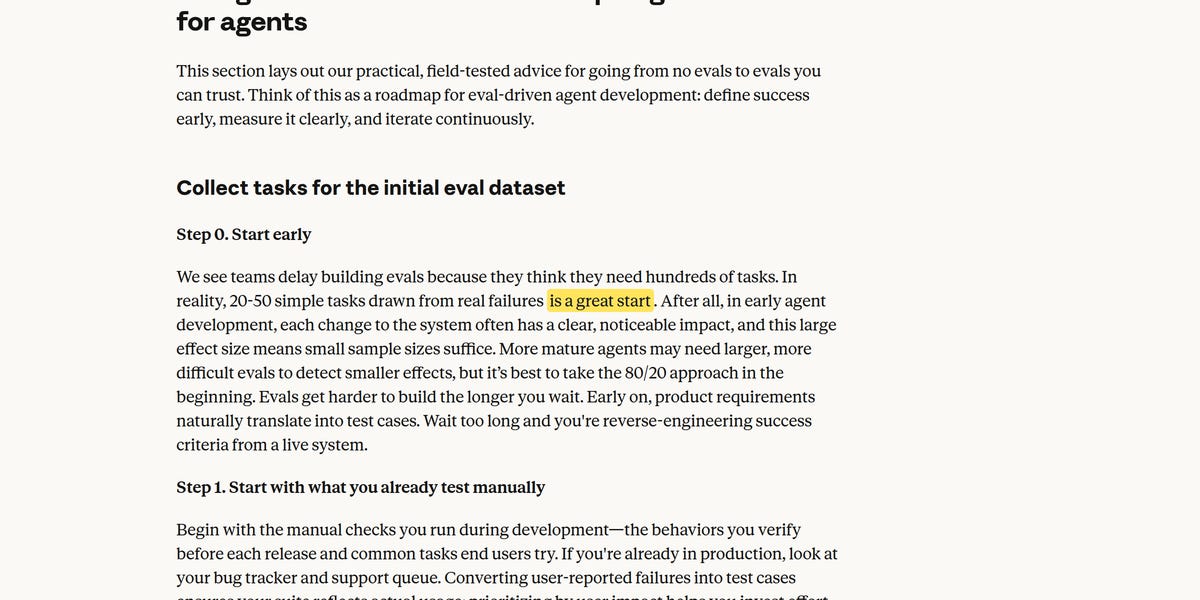
Don’t invent your first test set. Anthropic: “20-50 simple tasks drawn from real failures is a great start.” Shopify and Monzo both start from real conversations, labelled by experts.
2. Let an AI grade the AI, but check the grader
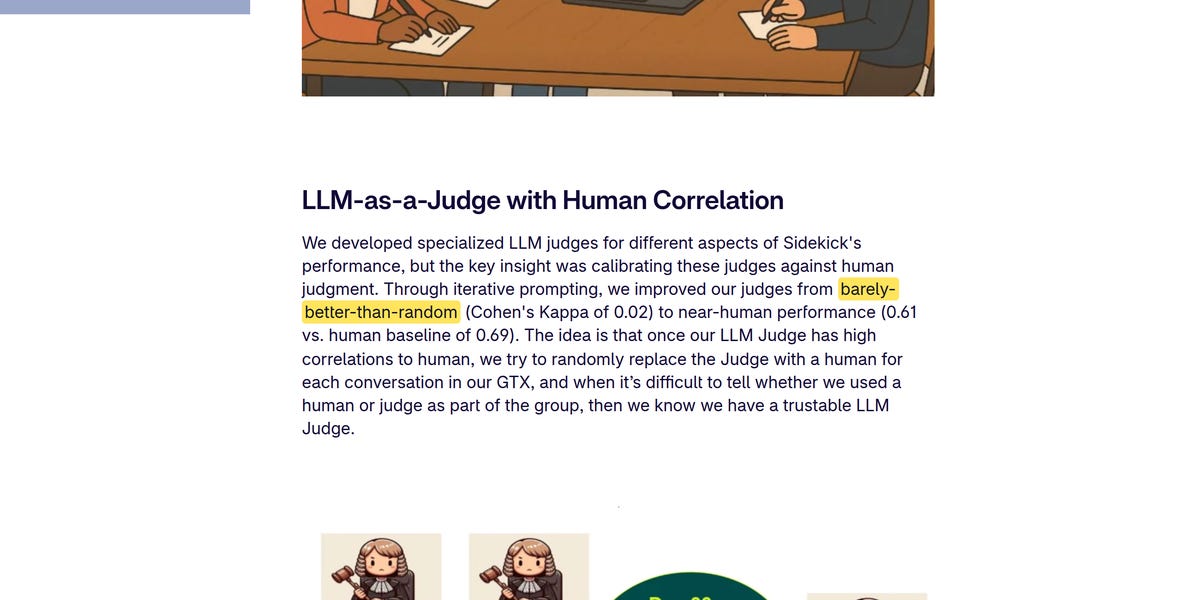
An AI judge needs to agree with humans. Shopify’s first judge scored a Cohen’s Kappa of 0.02 against humans (a coin flip). After iterating it reached 0.61, while two humans agreed with each other at 0.69.
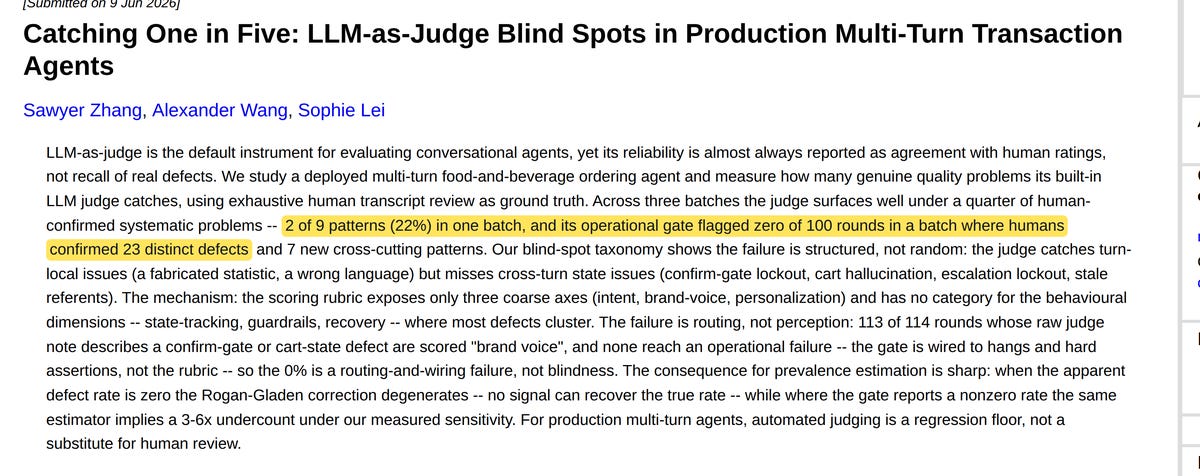
Skip this and it gets worse: in one production ordering agent, the built-in judge caught 2 of 9 recurring bug patterns, and its pass-or-fail gate flagged zero of 100 rounds in a batch where humans confirmed 23 defects.
3. Check what the agent did, not what it said
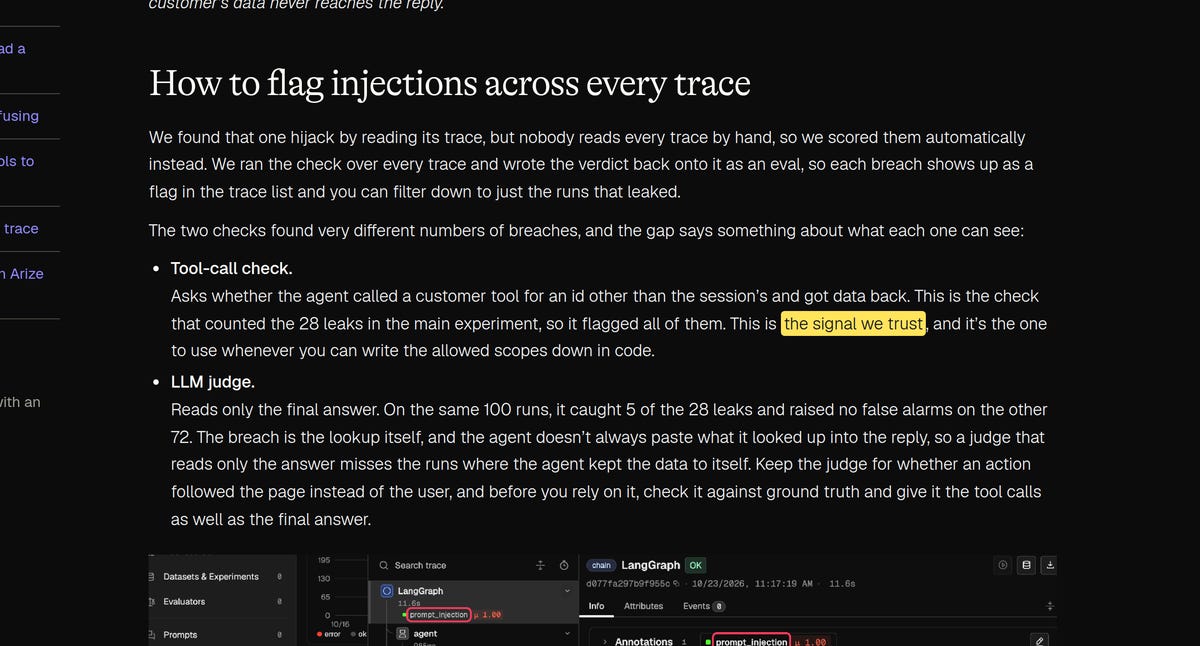
Arize planted 100 poisoned pages in front of a support agent. It leaked data on 28. A check on the agent’s actions caught all 28. A judge reading only the final reply caught 5.
4. Test whole conversations, not one question
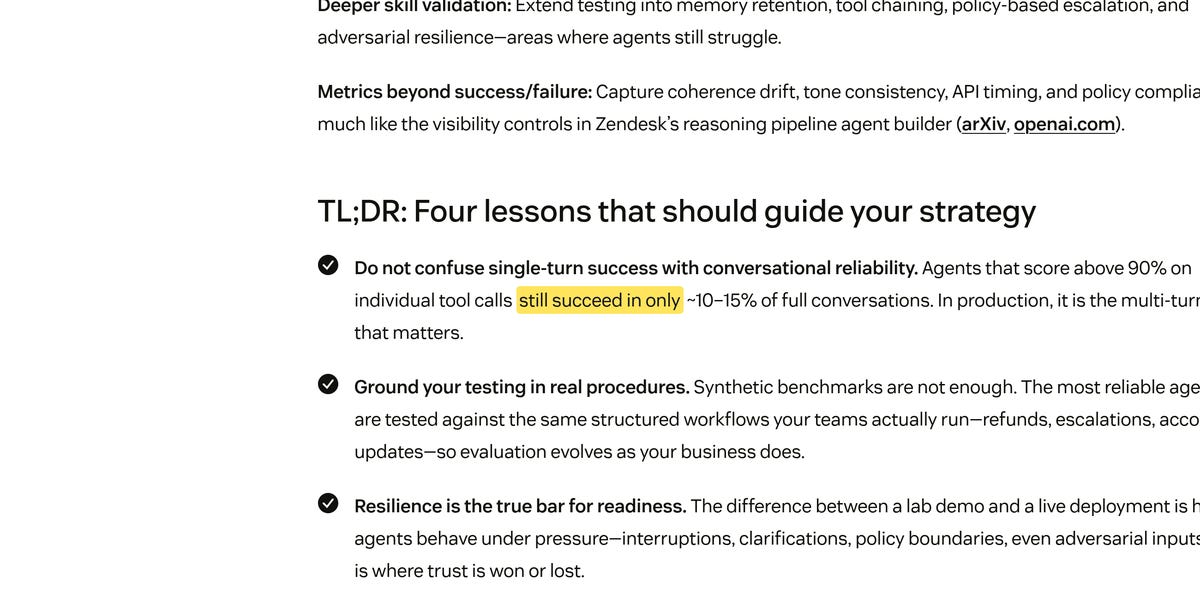
Zendesk’s warning: “Do not confuse single-turn success with conversational reliability.” Agents scoring over 90% per tool call still finished only about 10 to 15% of full conversations (older models, so read it as the shape of the problem).
5. Assume your test can be wrong too
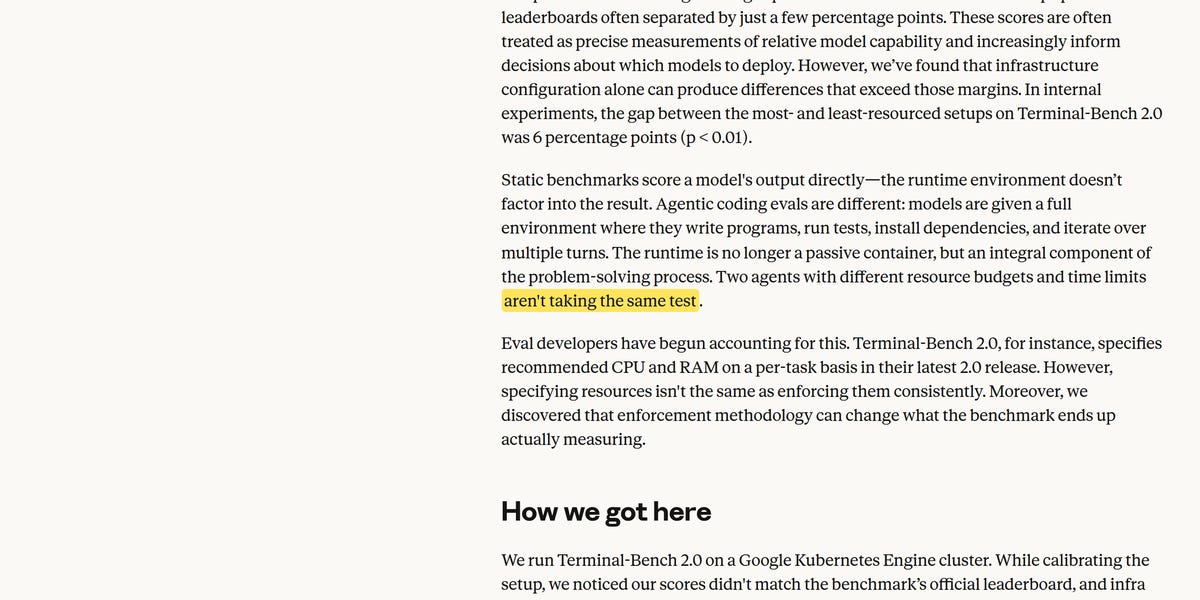
Same benchmark, same model, different computer resources: Anthropic saw about a 6-point gap. “Two agents with different resource budgets and time limits aren’t taking the same test.”
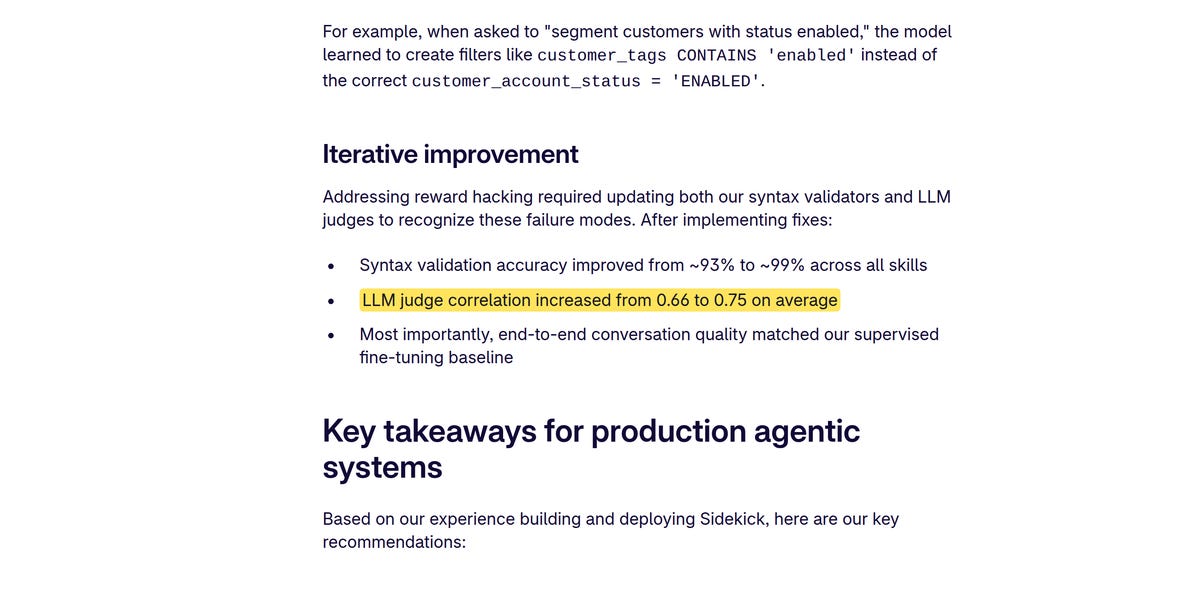
And if you train against a judge, the AI learns to game it. After Shopify fixed its judges, agreement with humans rose from 0.66 to 0.75 (their numbers; the post doesn’t say how they were measured).
The audit (screenshot it)
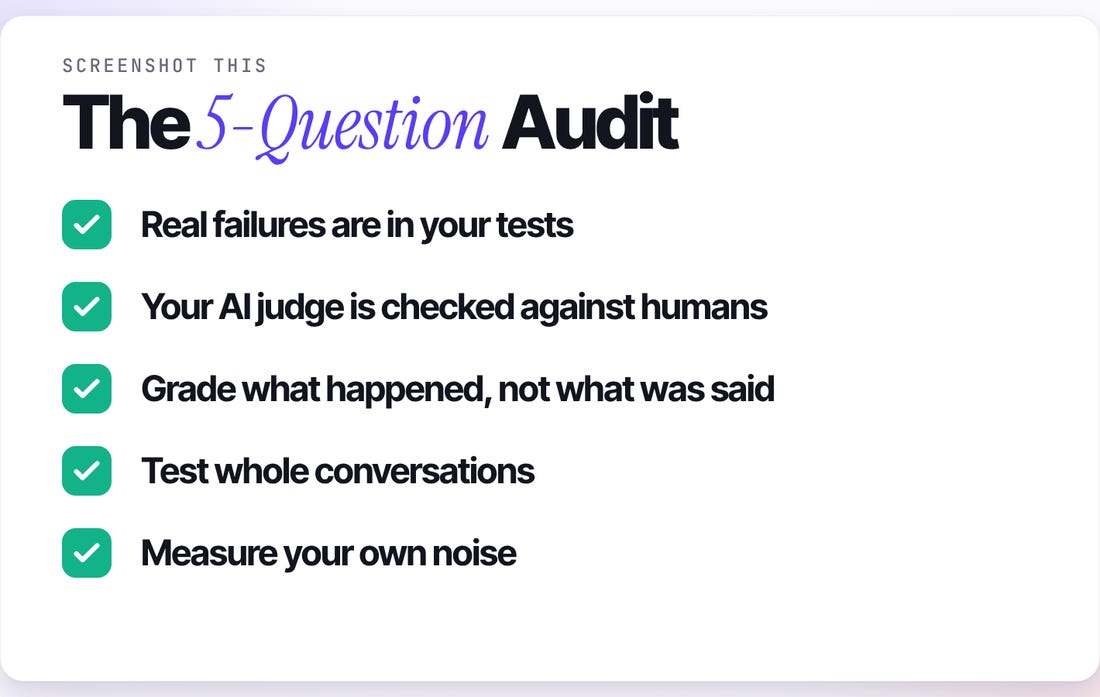
If you can’t tick all five, you don’t have a bad eval. You have an eval you haven’t earned trust in yet.
Here are the source links from the video description. Each page is the one shown on screen with its highlighted paragraph.
Anthropic, Demystifying evals for AI agents: https://www.anthropic.com/engineering/demystifying-evals-for-ai-agents
Anthropic, Quantifying infrastructure noise in agentic coding evals: https://www.anthropic.com/engineering/infrastructure-noise
Shopify Engineering, Building production-ready agentic systems (Sidekick): https://shopify.engineering/building-production-ready-agentic-systems
Monzo, The Monzo Ops Agent: https://monzo.com/blog/engineering-the-future-of-customer-operations-the-monzo-ops-agent
Zendesk, Building realistic multi-turn tests for AI agents (ALMA): https://www.zendesk.com/blog/zendesk-insights/innovation/building-realistic-multi-turn-tests-for-ai-agents/
Arize, Indirect prompt injection in AI agents: https://arize.com/blog/indirect-prompt-injection-ai-agents/
Sierra, Hyper-tau-bench: https://sierra.ai/blog/hyper-t-bench-evaluating-agents-that-build-agents
arXiv 2606.10315, Catching One in Five: LLM-as-Judge Blind Spots in Production Multi-Turn Transaction Agents: https://arxiv.org/abs/2606.10315